 Sofia, 105 Kliment Ohridski Blvd.


 Book appointment
 Melatonin — much more than a "sleep hormone
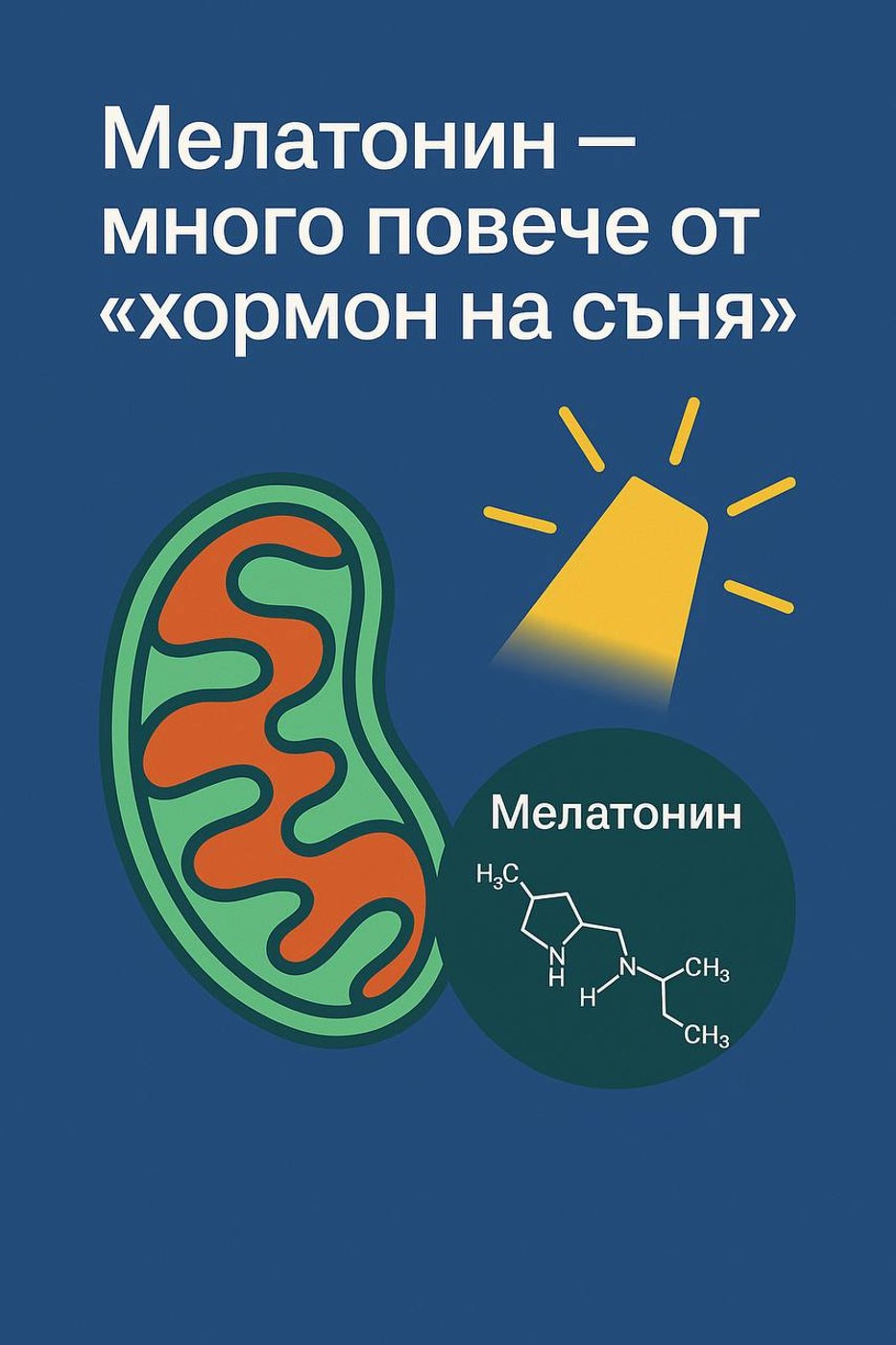
🧠 Part 1 of 2 Melatonin — much more than a "sleep hormone" We often hear that melatonin simply helps us sleep. The truth is that this function is only the tip of the iceberg – it has a profound effect on almost every system in the body. 🔬 Did you know that:
• Only 5% of melatonin comes from the pineal gland
• The main production is in the mitochondria — there it is up to 100 times more concentrated than in the blood
• Melatonin stabilizes the mitochondrial membrane and stimulates the production of water and energy (ATP) 🌙 Multifaceted benefits of melatonin:
✔ Circadian rhythm control
✔ Potent antioxidant
✔ Immunomodulation and suppression of inflammation
✔ Protection against tumors and neurodegeneration
✔ Cardioprotection and hormone regulation 📌 Next part 👉 effects on metabolism, intestinal health and relationship with infrared light
⬇️ Continue with Part 2 ⚙️ Part 2 of 2 Melatonin: metabolism, gut and infrared light 🧬 Regulation of metabolism
Melatonin improves insulin sensitivity and glucose balance by stimulating GLUT-4 receptors - "doorways" for glucose to enter the cell. 🦠 Gut health and microbiome
It affects the microbiome, increasing the production of fatty acids such as butyrate and acetic acid — important for energy balance and colon health. 💡 Infrared light (red light therapy)
The presence of the near infrared spectrum (NIR) stimulates the production of mitochondrial melatonin, which explains the therapeutic effect of red light on energy, recovery and metabolism. ⚠️ Lack of melatonin (from age, artificial light, night work) leads to:
– insulin resistance
– precocious puberty
– chronic inflammation and oxidative stress
– metabolic and neurodegenerative risks
 +359 879 570 628
 info@agaia.pro


Comments 0
Share your experience or ask a question — approved comments appear here.
Leave a comment
Comments are published after a short review.