 Sofia, 105 Kliment Ohridski Blvd.


 Book appointment
 Vitamin D and the gut microbiome – a bidirectional relationship
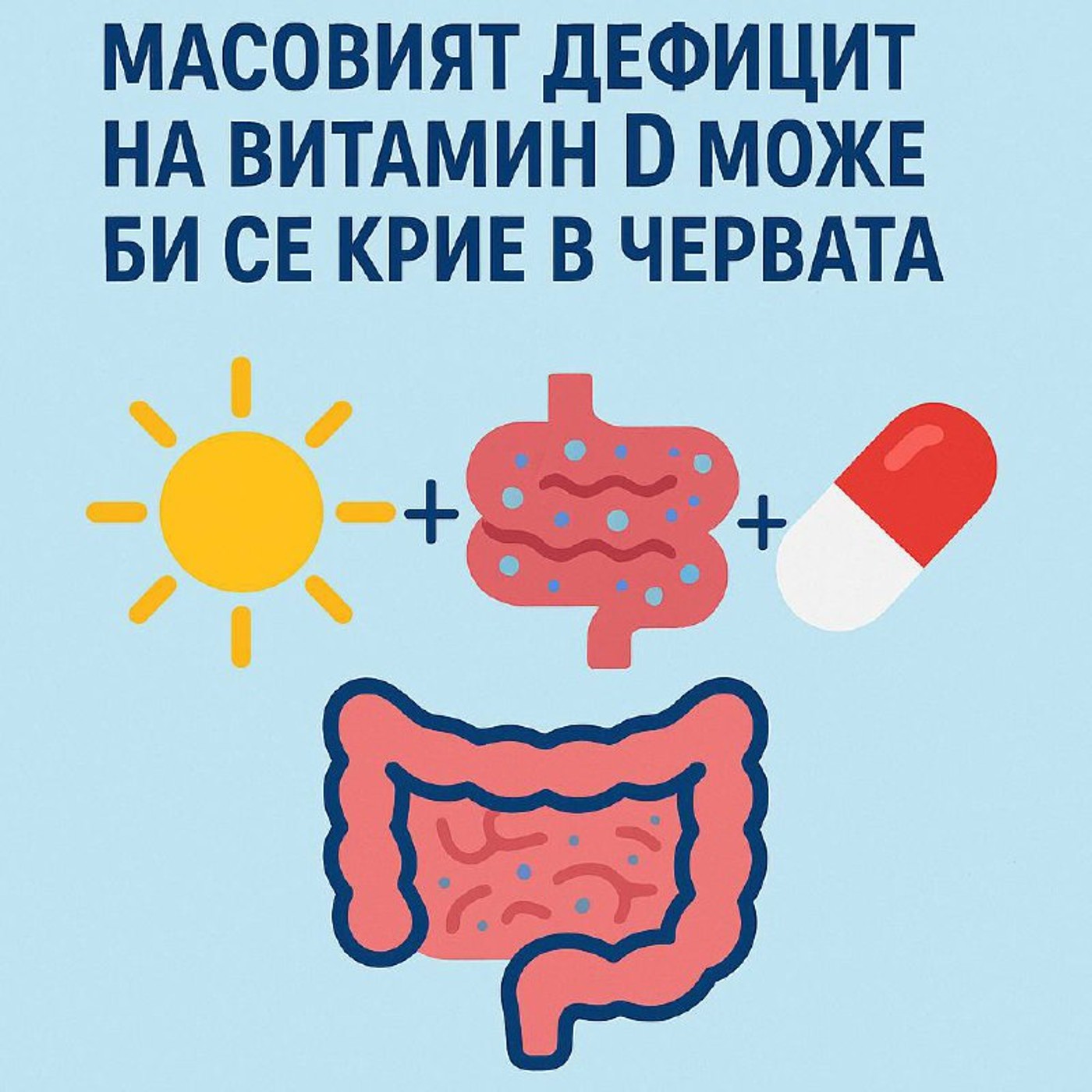
✨ Part 1 🔗 Vitamin D and the gut microbiome – a two-way relationship 1️⃣ Vitamin D → intestines
• The active form (calcitriol) binds to vitamin D receptors (VDR) in intestinal cells.
• The VDR stimulation:
• reinforces the barrier 🛡️
• reduces inflammation 🔥
• regulates the immune system ⚔️
• In case of deficiency → the barrier weakens → leaky gut → dysbiosis and chronic inflammation. 2️⃣ The intestine → vitamin D
• Bacteria in the colon (especially buturate-producing bacteria) affect VDR activity.
• Butyrate (SCFA):
• is energy for colonocytes ⚡
• enhances VDR expression
• improves vitamin D metabolism
👉 Without them, even the sun ☀️ or supplements 💊 do not work fully. ✨ Part 2 3️⃣ Deficiency and dysbiosis - a vicious circle 🔄
• ↓ Vitamin D → weakened defense → pathogens dominate 🦠 → ↓ butyrate-producing bacteria.
• ↓ Bacteria → weaker VDR activation → even weaker vitamin D metabolism.
➡️ Result: mass deficiency that is not always corrected by sun or supplements alone. 4️⃣ What should we do? ✅
• Fiber and prebiotics 🥦 (fruits, vegetables, legumes).
• Fermented products 🥒 (kefir, sauerkraut, kombucha).
• Sufficient sun ☀️ (regular but safe).
• Vitamin D supplement 💊 + probiotics and prebiotics.
• Minerals: magnesium, zinc and vitamin K2 ⚖️ → support metabolism. 📌 Conclusion:
Vitamin D and the microbiome work as a team 🤝.
Healthy gut = more effective vitamin D.
Sufficient vitamin D = healthy barrier and balanced microbiome.
 +359 879 570 628
 info@agaia.pro


Comments 0
Share your experience or ask a question — approved comments appear here.
Leave a comment
Comments are published after a short review.